
FCRA bill to be discussed in Parliament on August 12...
August 7, 2026

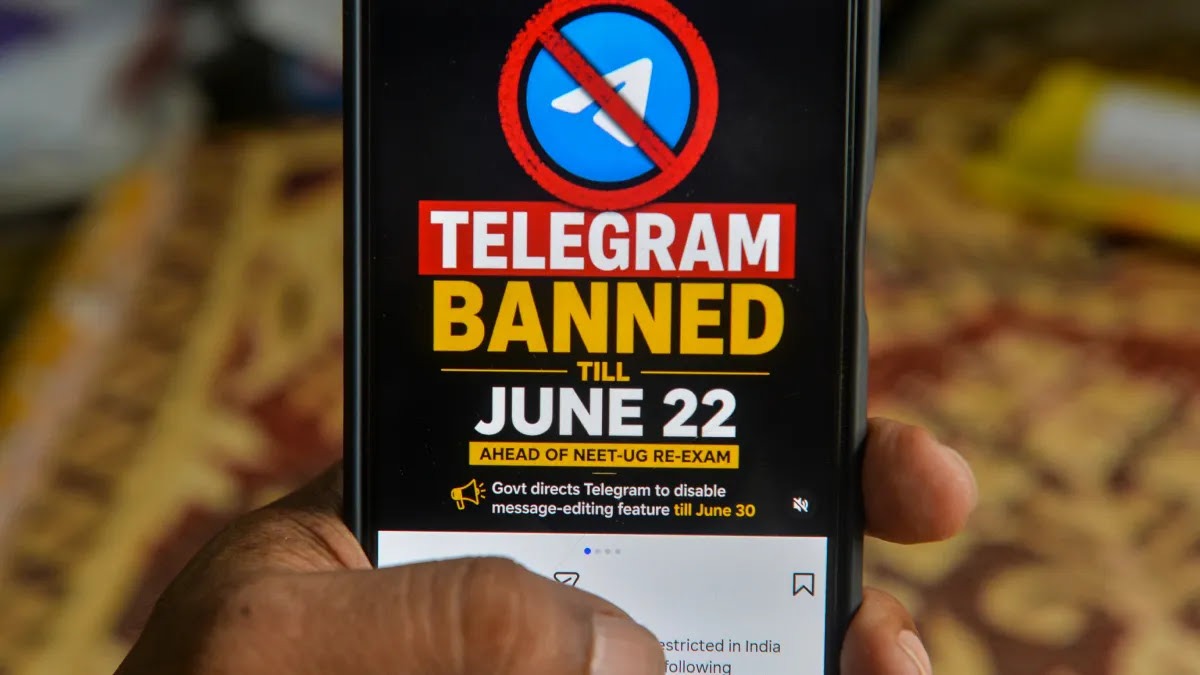
Delhi High Court on Friday upheld the Centre’s decision to temporarily block access to Telegram for five days ahead of the NEET-UG re-test scheduled for June 21, holding that the measure was justified to prevent any potential leak of examination material or misuse of the messaging platform during the conduct of the exam.
The court accepted the government’s contention that the temporary restriction was a preventive step aimed at safeguarding the integrity of the examination process. The order came a day after the High Court had reserved its verdict following extensive arguments on the legality, necessity and proportionality of the temporary ban.
Justice Tejas Karia observed that the reasons cited by the Centre for temporarily blocking Telegram were adequate in the prevailing circumstances and rejected the platform’s argument that the order suffered from procedural lapses or lacked sufficient justification.
“After considering all the arguments, we find that given the emergency nature, the reasons supplied are sufficient and the government has followed the procedure under Section 69A,” the court said while upholding the Centre’s decision.
The court further held that both the original blocking order and the subsequent decision of the Review Committee were reasoned orders demonstrating due application of mind by the authorities.
“The orders are well-founded and supported by reasons. The orders do not suffer from non-application of mind,” Justice Karia observed.
Rejecting Telegram’s contention that the blocking order was disproportionate, the High Court accepted the Centre’s argument that the temporary restriction was a narrowly tailored measure intended to prevent misuse of the platform during the NEET-UG re-examination.
“The government’s measures are least restrictive. It cannot be held that the order is disproportionate,” the court said.
The High Court also dismissed Telegram’s submission that an entire platform could not be blocked under Section 69A of the Information Technology Act, noting that the provision does not exclude an intermediary platform from the ambit of the term “information.”
“We have also held that under the IT Act there is no reason to exclude the platform from the ambit of ‘information’,” the court observed.
In view of these findings, the court dismissed Telegram’s petition and declined to interfere with the temporary blocking order issued by the Central Government.